


For less than the cost of your matcha, subscribe to get full access. Cement your status as an insider and support your community. We love you Miami.
WHAT’S GOOD MIAMI: 3.10.26
Beach Business
The Delano Is Back. Will The Magic Return?
On April 27th, the curtains part again and the legend returns.
AP House Just Landed in Sunset Harbour.
Audemars Piguet opened its 16th AP House on the top floor of Eighteen Sunset.
Pizza Tropical Returns. And it stands on its own.
Pizza Tropical isn’t dying. 7010 Biscayne Boulevard. Upper East Side.
Trump Is Building a “Library” in Miami. There Are No Books.
A 50-story glass tower with TRUMP in gold letters across the facade.
The Rest of the Country Fills Rooms. Miami Sells Out.
87.3% occupancy. Nightly rates up 17% to $315.
Hospitality Local Insider
What’s Going to Be Good: CHO Funky Asian Bistro
Miami Beach is finally getting the Asian restaurant it deserves.
On My Mind: The Sea Doesn’t Part Until You Step In
Passover is here. And if you’re in Miami right now, you know it, this city swells during the holiday in a way that is unmistakable. The restaurants are full, the hotels are packed, the pool decks are alive, and somewhere between the seder plates and the south Beach sunsets, thousands of Jewish families are doing what Jews have always done, gathering, arguing, laughing, eating too much, and retelling the oldest story in the tradition. Miami during Passover has its own energy. It always has. And every year it brings me back to the same moment in the story, not the plagues, not the escape, not the manna. The sea.
Because the Kabbalistic teaching around the parting of the Red Sea is one of the most honest things I have ever encountered about what it actually takes to move forward in life. The sea did not part when Moses raised his staff. According to the mystics, it parted when Nachshon, a man no one remembers, walked in up to his nose. Faith expressed not as prayer but as motion. The miracle was always available. It was waiting on the human being to move first. We spend so much of our lives waiting for conditions to be right. For the path to be clear. For someone to tell us it’s safe. But the teaching is unambiguous, the water doesn’t move until you do. The clarity comes after the commitment. The parting is the reward for the step, not the invitation to take it.
Whatever sea is in front of you right now, walk in. The miracle has been waiting.

BEACH BUSINESS
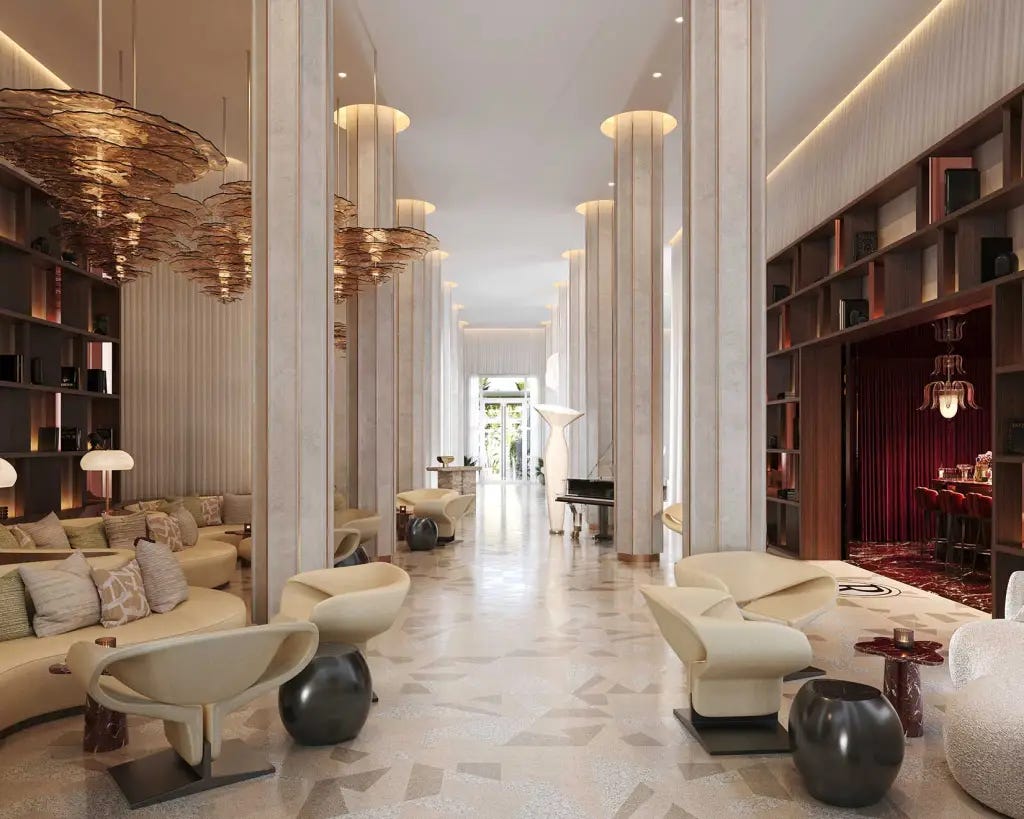
Preview: The Delano Is Back. Will The Magic Return?
There are hotels. There are iconic hotels. And then there is the Delano.
I know this personally. Twenty-five years ago I walked through those white curtains and something shifted. The energy in that room, the pool, the people, the feeling that you were exactly where the world was happening, changed the trajectory of my life. I’m not sure I live in Miami today if that moment doesn’t happen. I know I’m not alone in that.
The Delano didn’t just host people. It converted them.
When Ian Schrager and Philippe Starck reimagined it in the 1990s, they didn’t just renovate a building, they invented a category. The boutique hotel era began on Collins Avenue, behind a veil of billowing white curtains, at a pool that became the most photographed in the world. For a generation of travelers, tastemakers, and night owls, the Delano wasn’t a place you stayed. It was a place you arrived.
Then it went dark. Five years of scaffolding, speculation, and rumors. South Beach held its breath.
On April 27th, the curtains part again.
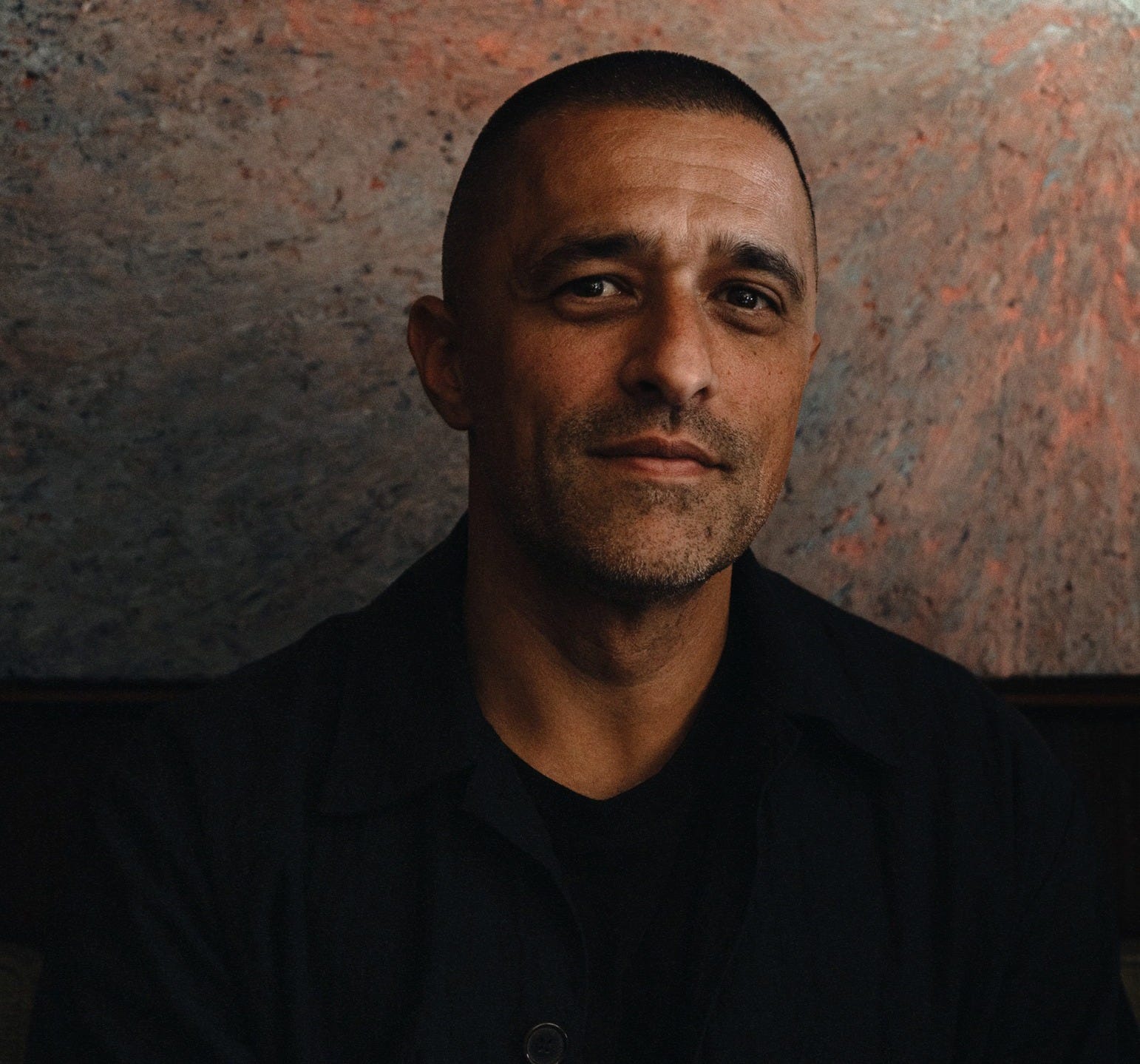
At the helm is Ben Pundole, one of the most compelling minds in modern hospitality, a man who understands that a great hotel is never really about the rooms. It’s about the feeling. It’s about who shows up and why they keep coming back. With Pundole steering the vision, the new Delano isn’t just a renovation story. It’s a statement.
The bones are all there. Terrazzo floors. Hexagonal columns. The white-on-white sensibility that made the place feel like a dream you weren’t sure you’d been invited to. All of it intact. All of it sharper.
Four food and beverage concepts anchor the property, including the resurrection of the Rose Bar, once the most electric room in South Beach, where Hollywood royalty and Miami’s creative class shared the same barstool. Alongside it, two concepts from Paris Society making their American debut: Gigi Rigolatto, a high-energy Italian restaurant built around Mediterranean warmth, yellow Siena marble, and long lunches that have no intention of ending, and Mimi Kakushi, an intimate Japanese concept on the fourth floor inspired by 1920s Osaka, available exclusively to members and hotel guests.
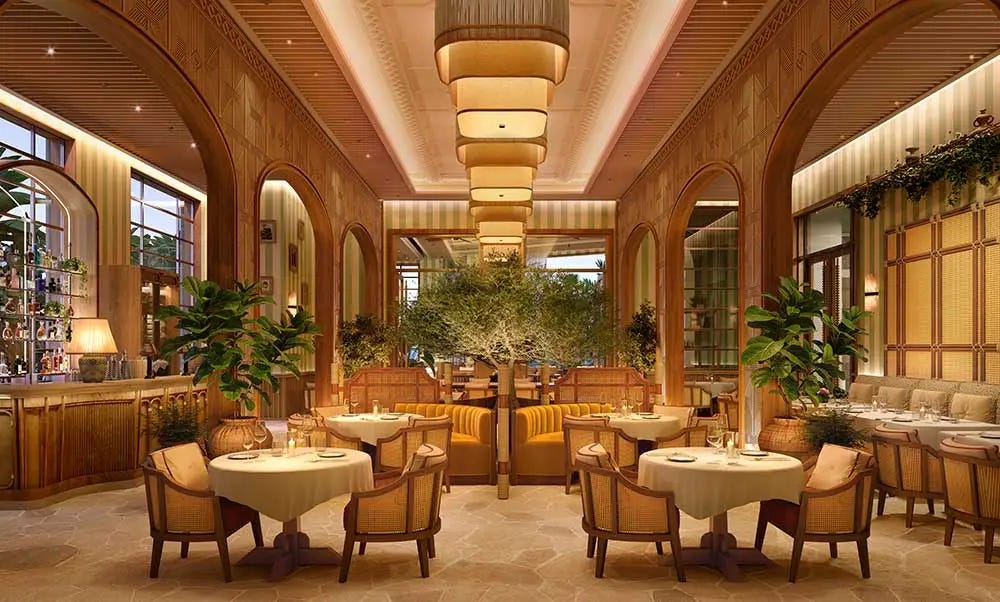
Which brings us to the most exciting element of the new Delano: the membership club. This isn’t a loyalty program. This is a room inside the room a curated community of creative minds, tastemakers, and people who understand that the best things in life happen when the right people are in the same place at the same time. Miami has needed this. The Delano was always the right address for it.
But here is the honest question nobody wants to ask out loud.
The Delano is now a brand. Part of a much larger hospitality group with global ambitions Dubai, Paris, and whatever city comes next on the expansion map. That is not a criticism. It is a reality. And it is the exact tension that will define whether this reopening becomes a legend or just a very good hotel.
Because the magic of the original Delano was never really about the design. It was about the feeling that something alive was happening inside those walls. That the staff had a spirit. That the guests felt permission to be a little more themselves than they were when they arrived. That the room held something, call it energy, call it soul, call it whatever you want, that you couldn’t manufacture with a renovation budget.
The questions that matter now are not about the terrazzo floors or the marble or the Rose Bar playlist. They are harder than that. How personal can it feel at scale? How honest and genuine will it be when the corporate playbook is always somewhere in the room? Will the staff be given space to actually express themselves, or will they be managed into pleasantness? Will guests feel safe enough to go somewhere outside of themselves? Will the design breathe, or will it just photograph well?
Some hotels give you a bed. The great ones give you a life.
The Delano gave me mine. It’s back. Now we wait to see if the magic returns.
AP House Just Landed in Sunset Harbour And It’s Not a Store
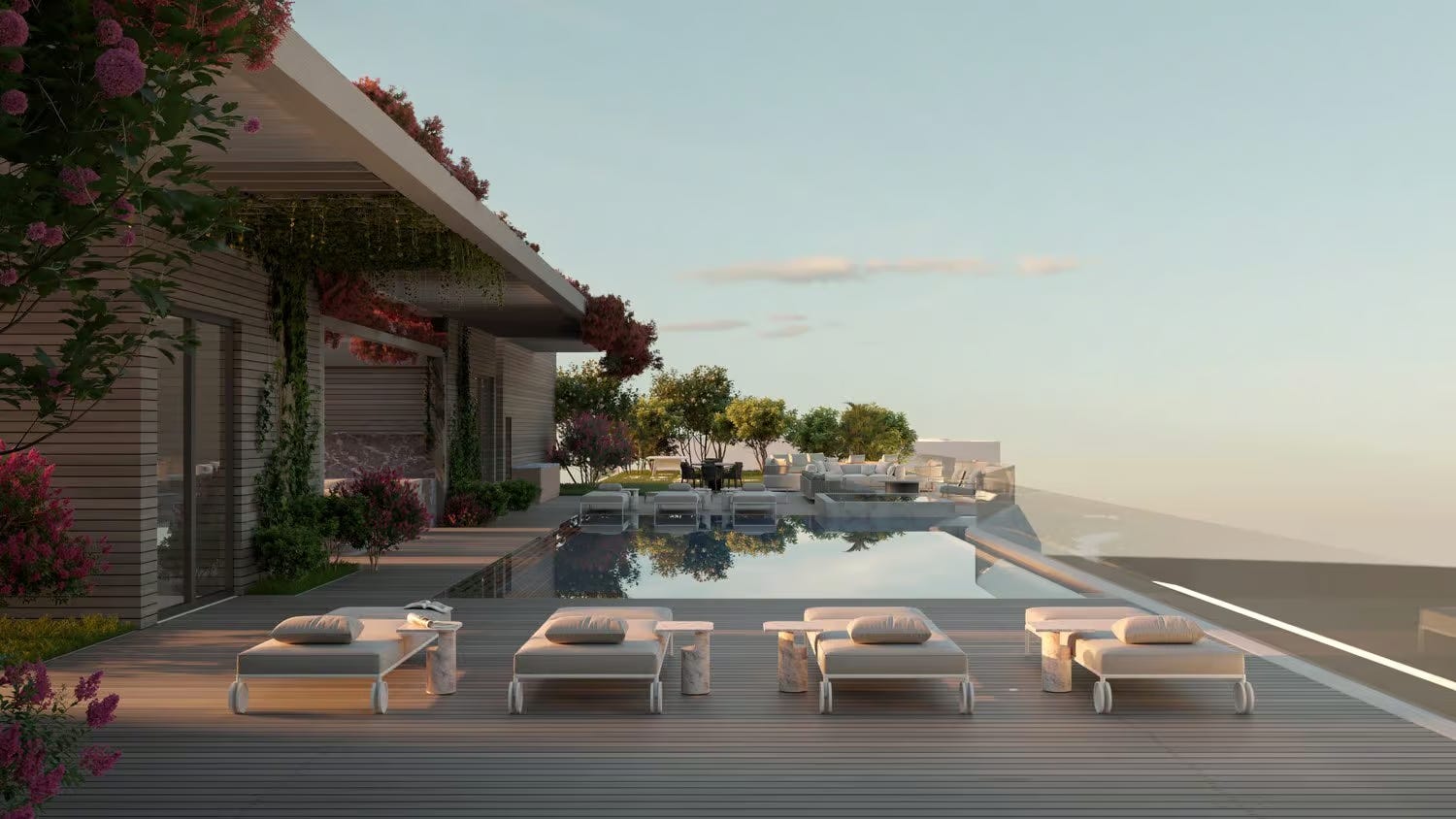
Audemars Piguet just opened its 16th AP House on the top floor of Eighteen Sunset, and the word “boutique” doesn’t come close. Eleven thousand square feet, a private lobby elevator, wrap-around balconies, a pool, and unobstructed views of Biscayne Bay. No price tags in sight. No sales floor. Just the quiet, unmistakable message that if you have to ask, you’re probably not the customer.
This is what happens when a brand with watchmaking margins that would make a pharma exec blush decides to play real estate. AP doesn’t need foot traffic, they need the right ten people in a room. And Sunset Harbour, which has spent the last few years quietly transforming from a local neighborhood into one of the most concentrated pockets of serious money in the country, is now exactly that room. The restaurants got better. The fitness culture got intense. The residential prices got obscene. And now Audemars Piguet is on the top floor looking down at the bay like they own the whole thing.
That’s what Sunset Harbour has become, not a scene, not a strip, but a destination with a point of view. The kind of place global luxury brands choose when they’re done with Bal Harbour and ready to be somewhere that actually has a pulse. AP didn’t just open a location. They validated a neighborhood.
Pizza Tropical Is Back. And It Found a Better Address.
Some restaurants feed a neighborhood. And then there are the ones that become the neighborhood, the place where the night ends, where the inside jokes are born, where you run into everyone you know and a few people you’ll never forget.
For nearly a decade, Pizza Tropical was that place for Wynwood.
It was never really about the pizza. It was about what the pizza represented, a late-night ritual for concert goers, comedians after a set, karaoke regulars, and anyone who understood that the best Wynwood nights ended with a slice in one hand and hot honey wings in the other. It fed the neighborhood when Wynwood was still scrappy, still creative, still communal, before the cranes arrived and the rents followed.
When Gramps closed and Pizza Tropical went with it, Miami felt it. The mourning was real. So was the goodbye party. But at that same farewell, owner Adam Gersten stopped the room cold, Pizza Tropical isn’t dying. It’s relocating.
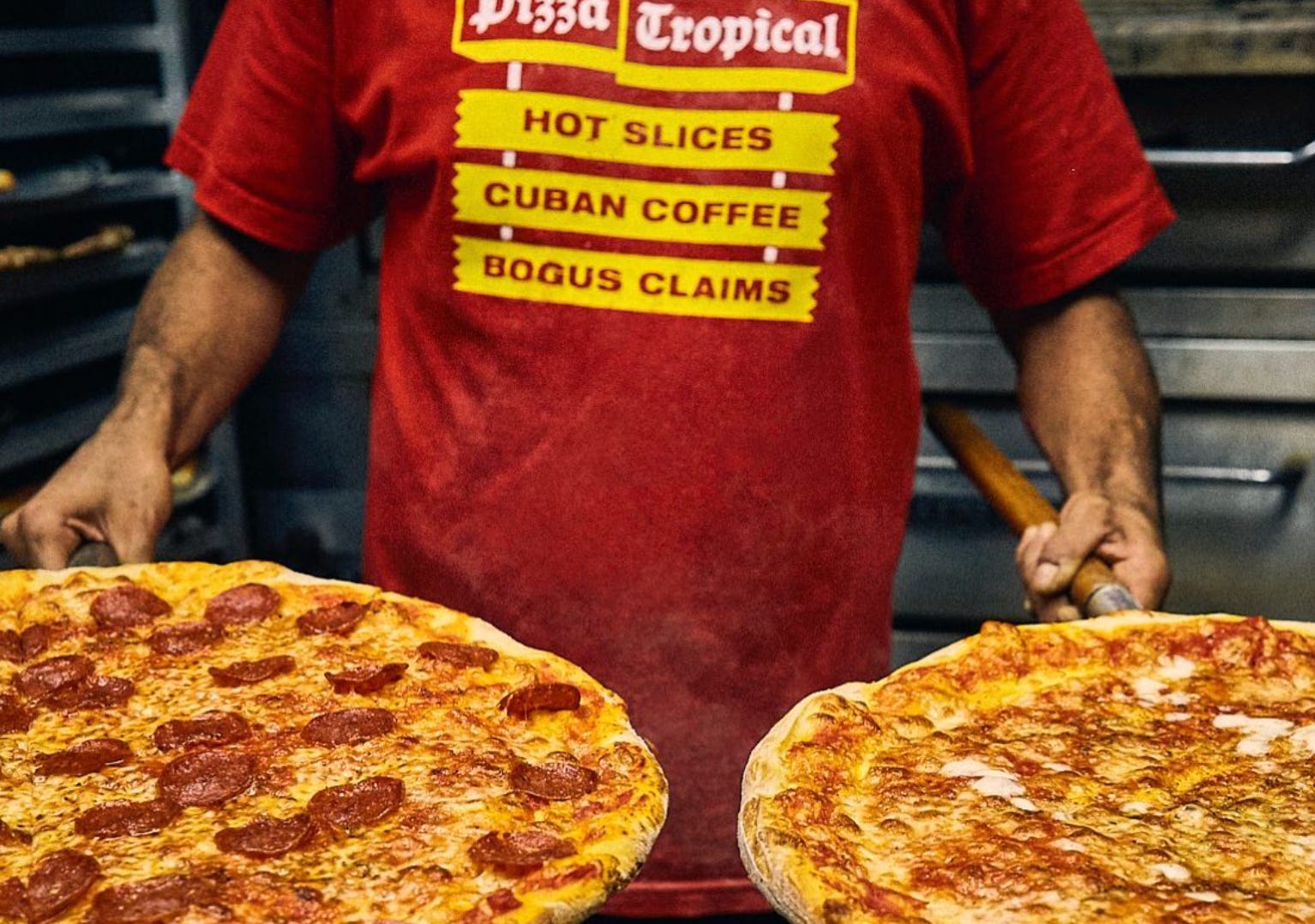
7010 Biscayne Boulevard. Upper East Side. Next to Dogma. A partnership between founders Frank Pinello and Gersten alongside one of the restaurant’s longest-serving employees. Expanded menu. All the classics.
Wynwood grew up and priced itself into something different. Pizza Tropical kept moving to where the soul is.
Trump Is Building a “Library” in Miami. There Are No Books.
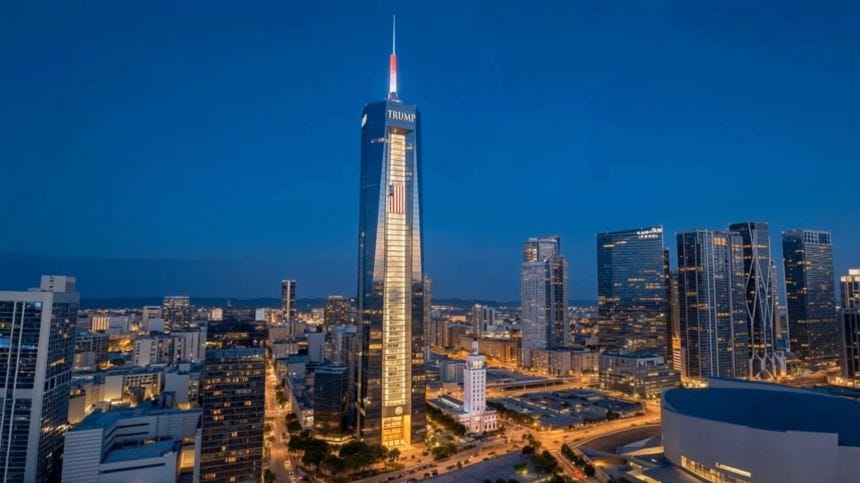
The renderings dropped this week and they are exactly what you’d expect. A 50-story glass tower with TRUMP in gold letters across the facade. A full-size Air Force One parked in the lobby. A golden escalator. A giant fist-pump statue of the man himself. A replica Oval Office. A ballroom. A rooftop garden.
Presidential library. Sure.
The building will sit on $67 million worth of prime downtown waterfront, next to the Freedom Tower, which it will dwarf, on land the State of Florida handed over for free. It was designed by Miami firm Bermello Ajamil, who we can only assume submitted the renderings with a straight face.
Other presidents built libraries. Trump built Vegas by the sea.
The doors aren’t open yet. But the gift shop is going to be incredible.

Miami Hotels are on Fire. Hot. Hot. Hot.
The World Baseball Classic came to town and Miami did what Miami does.
87.3% occupancy. Nightly rates up 17% to $315. Revenue per available room up nearly 29%. The rest of the country was sitting at 65.7% occupancy and $167 a night.
It wasn’t even close.
This is the gap between a city people visit and a city people need to be in. Miami has crossed that line and it’s not crossing back. Every major event that lands here doesn’t just fill hotels, it reprices them. The Baseball Classic did it. Formula 1 will do it again in May. And when the FIFA World Cup arrives this summer with seven matches, a million visitors, $1.5 billion in projected economic impact, this city is going to put up numbers that make this week look like a soft open.
The Delano just came back. The Waldorf Astoria is still going up. These properties aren’t speculative bets on Miami’s future. They’re receipts.
For decades, Miami carried a reputation as a seasonal city, a place that peaked in winter and went quiet when the heat arrived. That story is over. The calendar says otherwise. The occupancy numbers say otherwise. Miami isn’t a destination with a season anymore. It’s a city that has them all.
The world doesn’t take summers off from Miami. It just books earlier.
HOSPITALITY LOCAL INSIDER
What’s Going to Be Good: CHO Funky Asian Bistro
Miami Beach is changing. Not slowly, fast. The center of gravity is shifting, neighborhoods are bleeding into one another, and if you’re paying attention you can feel exactly where the new center is forming.
It’s happening right now in the stretch between Sunset Harbor and West Avenue. Trader Joe’s anchored it. Comras is redeveloping Lincoln. Infinity is taking over Shvo’s project on Alton at the end of Lincoln Road. Whole Foods is coming. What was once a corridor you passed through is becoming a corridor everyone is moving toward. The density is arriving. The money is arriving. The attention is arriving.
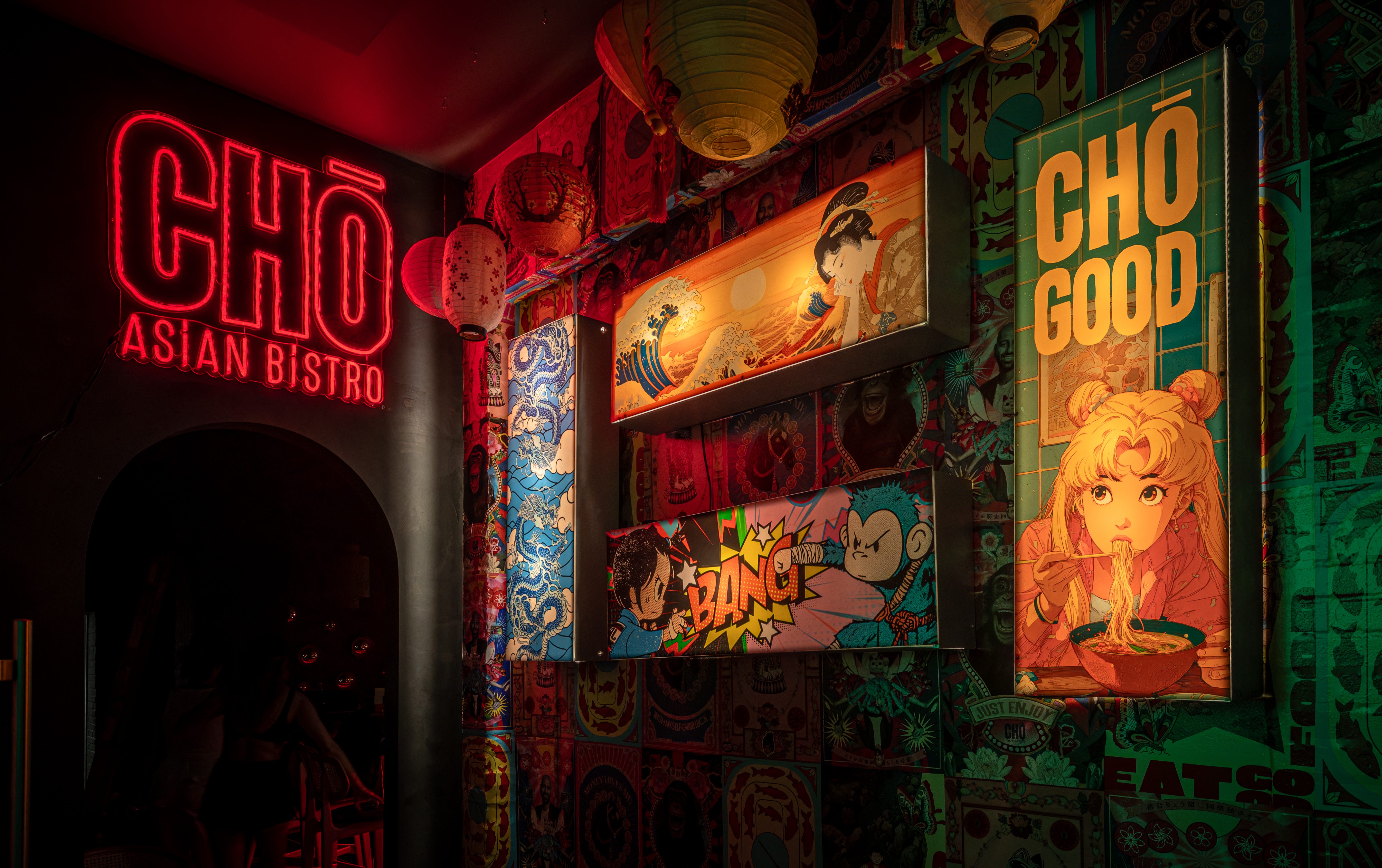
And right in the dead center of all of it is where Mo Alkassar decided to build CHO.
A location that used to feel questionable now feels inevitable. That’s the thing about great operators, they don’t follow the crowd to where a neighborhood already is. They read the city, trust their instincts, and plant their flag where the neighborhood is going.
Mo has been reading cities his entire career. From Qatar to Dubai, Coconut Grove to Wynwood, he has spent years building restaurants for other people, bringing vision, craft, and hospitality to concepts that wore someone else’s name. He knows what it takes. He knows what it costs. And he knows the difference between building something for a client and building something that is a true reflection of who you are.
CHO is the latter. This is Mo’s moment.
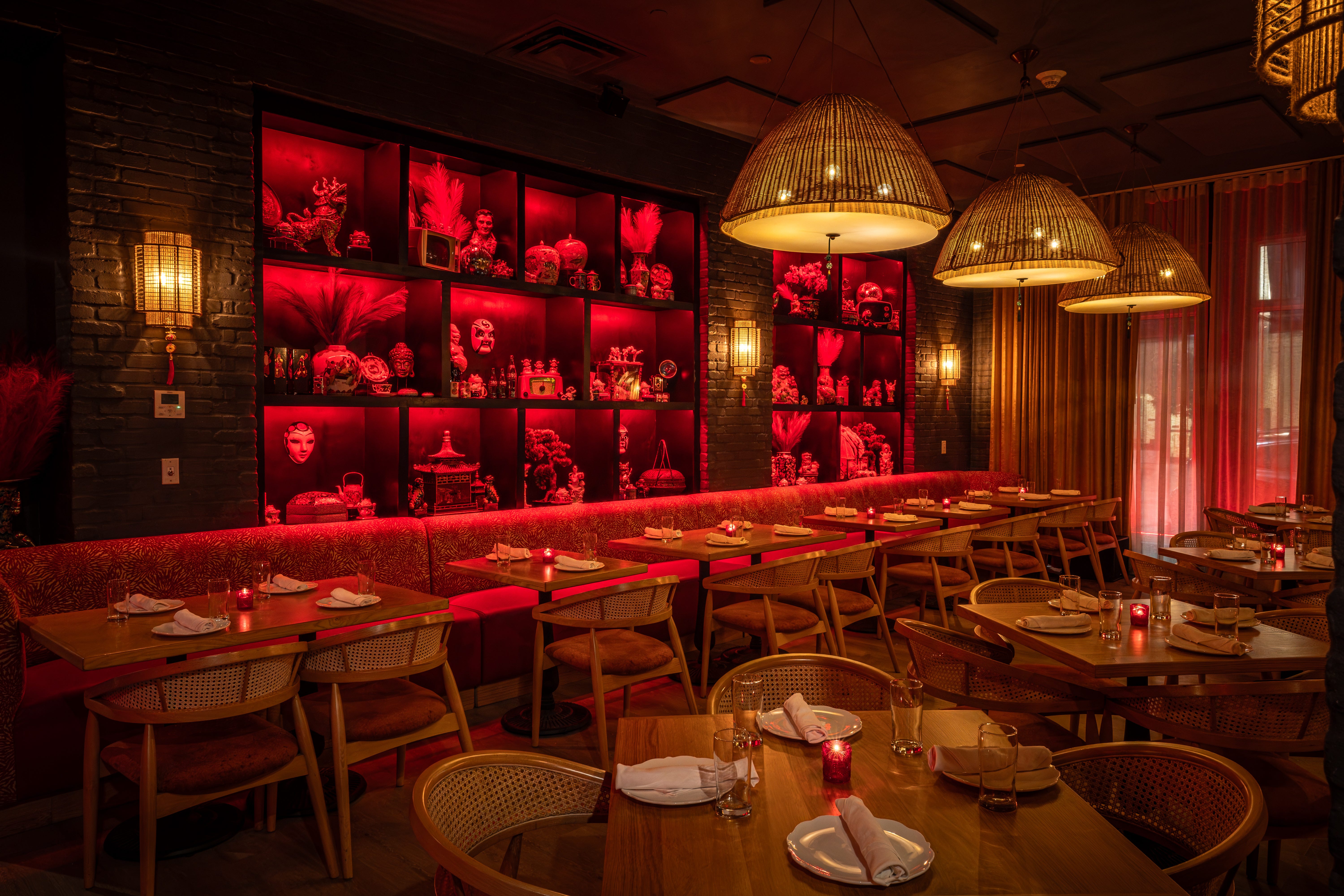
There is a particular kind of energy that comes from an entrepreneur who has finally decided to do their own thing. Not because they had to. Because they were ready. Because the years of watching and learning and executing for others have compressed into a point of view so clear and confident that the only honest move is to put it into the world under your own name. This is when most entrepreneurs do their best work. This is that moment for Mo.
And the timing couldn’t be more pointed, because South Beach has a glaring hole that CHO is built to fill.
This city has extraordinary food. But great, authentic Asian food served with best-in-class hospitality? That has never been South Beach’s strength. Drunken Dragon tried. KYU succeeded, before it was acquired, expanded, and became something else entirely. But Miami has never had its Momofuku. We have fancy Chinese. We have crispy rice on every corner. We have the down-and-dirty ethnic gems, Larb Thaiasian, Dumpling King, doing their thing with integrity. But no restaurant that spans Vietnamese, Thai, Japanese, and Chinese with the kind of seriousness and soul that makes you feel like you’ve found something real.
That is what CHO is swinging for.
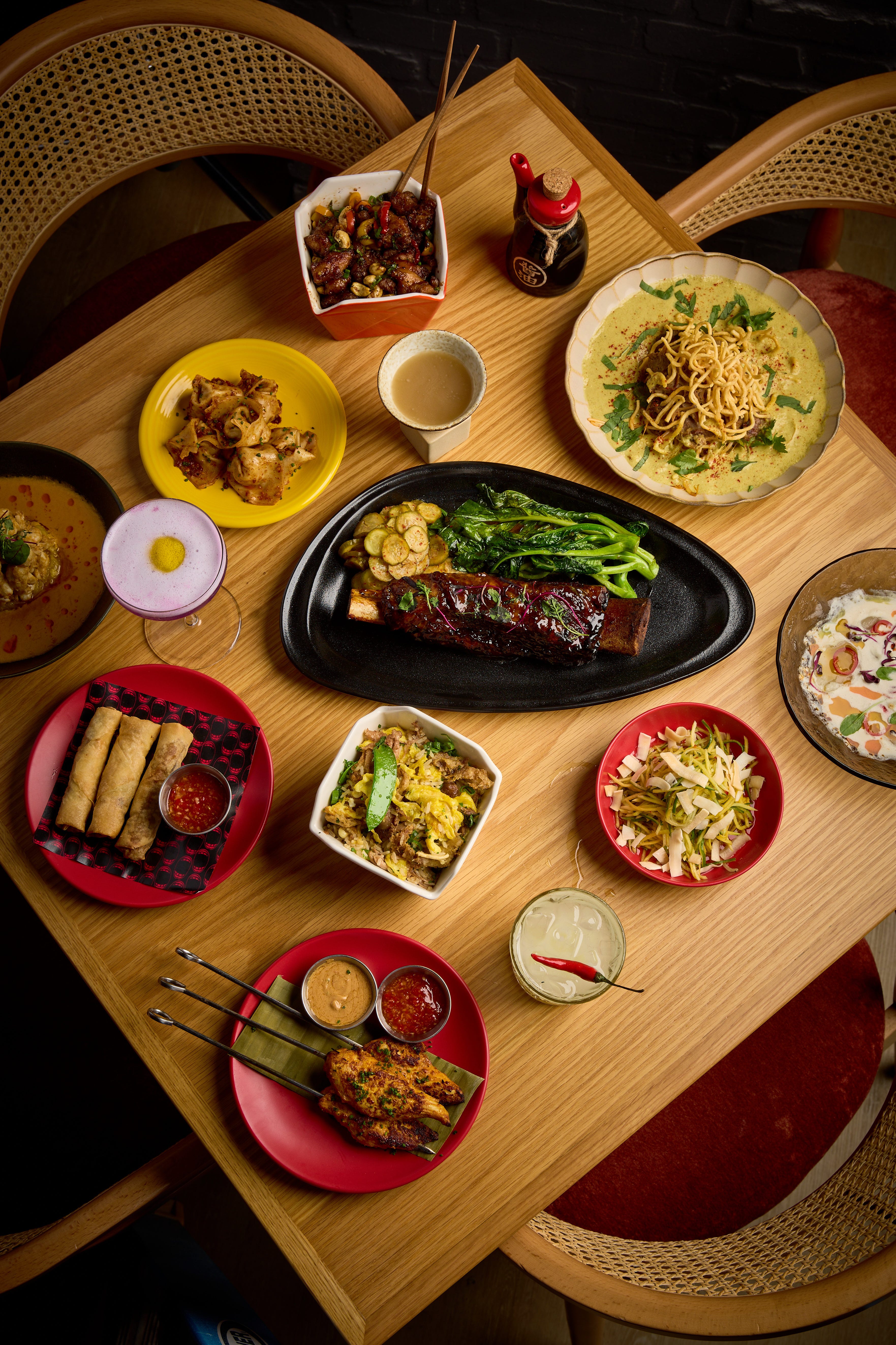
The menu reads like a chef who has eaten deeply and traveled widely and refuses to be pinned down by geography. Hamachi Mulhoe in a gochujang broth. Khao Soi Lamb Neck with crispy noodles. Cha Ca La Vong, Vietnam’s most iconic dish, with turmeric-marinated daily catch. Mashima Reserve Wagyu Zabuton sitting next to a $14 Eggplant Lumpia that will probably be the sleeper hit of the menu. Duck Wontons in golden chicken broth. Chili Shrimp Dumplings with timut pepper. A Crab Curry built around jackfruit and spaghetti squash that has no business working as well as it does on paper.
We had the honor of a preview. Here is what you need to know.
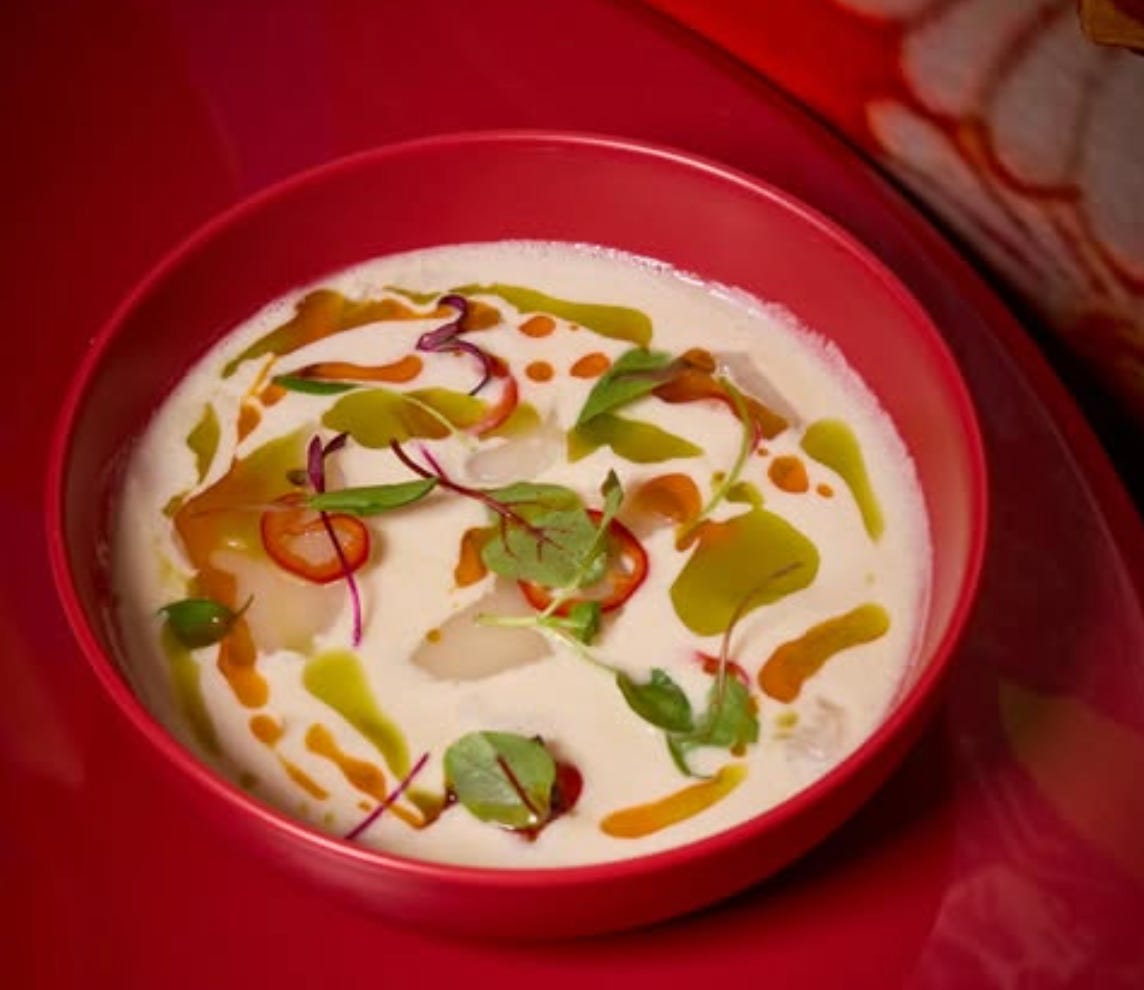
The Scallop Crudo is quite possibly the best dish we have eaten in 2026. Full stop. The Khao Soi Lamb Neck, egg noodles, crispy noodles, bean sprouts, is the kind of bowl that makes you cancel your plans and order another. The Duck Fried Rice was perfection in the most unfussy, confident way a dish can be perfect. And the Wasabi Cabbage Salad, Korean pear, apple, wasabi vinaigrette, we found ourselves wishing it was bottomless. Olive Garden style. No shame.
Then there are the drinks, which deserve their own conversation. An Asian riff on a margarita that was beautiful, light, and airy, the kind of cocktail that disappears before you realize you’re already halfway through your second. A rum punch served in a tiger cup that was as theatrical as it was delicious. And an ube martini that had no right being as good as it was.
This is a kitchen and a bar program firing in the same direction. That is rarer than it sounds.
South Beach has been waiting for this restaurant for a long time. It just didn’t know the address yet.
Now it does.
CHO Funky Asian Bistro | Miami Beach
Keep your SPF high and your standards higher.
See you at the beach,
Follow On: Instagram + Tik Tok + YouTube
Created by: THE MARKETING DEPARTMENT
For less than the cost of your matcha, subscribe to get full access. Cement your status as an insider and support your community. We love you Miami.